Bearing Cages: Functions, Materials and Selection
Technical guide | EIM Bearing
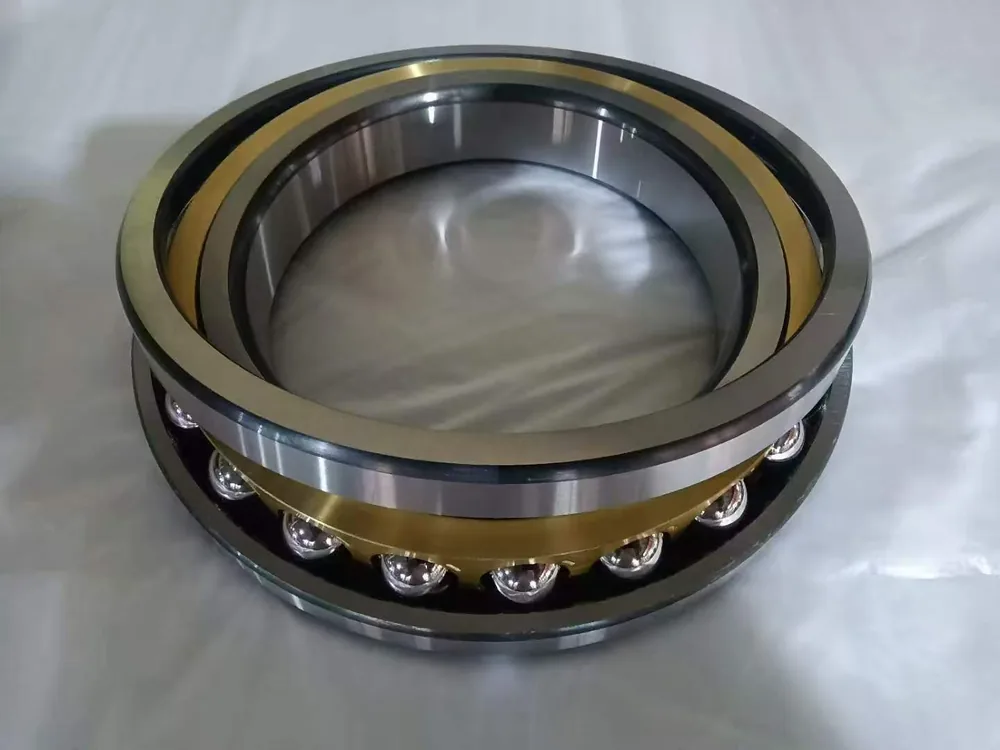
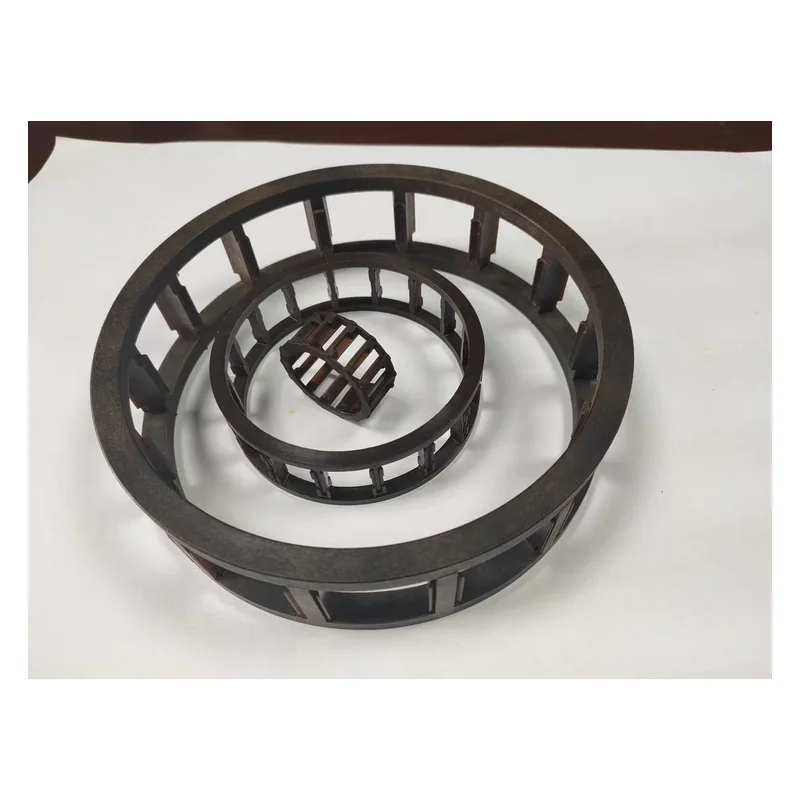
The overall structure of a rolling bearing, the cage (also called a bearing retainer) is not a core part that carries the main working load, yet it is a key functional component that determines the bearing's running accuracy, stability, and service life.
A suitable cage design has an important role in bearing reliability, even though the rolling elements and raceways carry the primary loads. This article will systematically walk you through the basics of bearing cages from four angles: function, material, manufacturing process, and selection, to give engineering designers and purchasing decision-makers a useful reference.
I. Core Functions and Performance Requirements
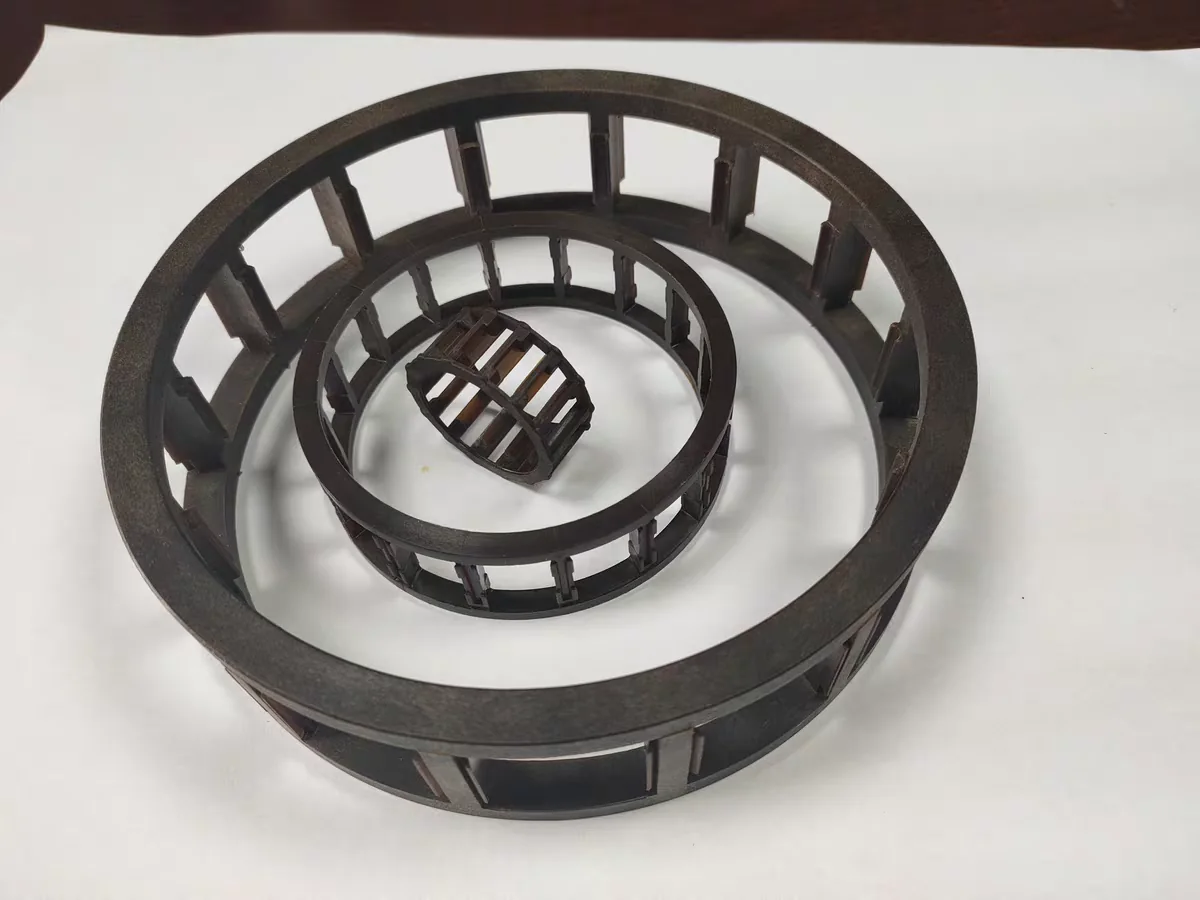
(I) The Four Core Roles of the Cage
The cage encloses all or some of the rolling elements and moves together with them.
Its roles can be summed up in the following four points:
1. Keeping rolling elements apart and reducing friction: Keep the rolling elements evenly spaced so they don't touch or collide during operation, effectively reducing friction loss and heat inside the bearing.
2. Even load distribution: Guide the rolling elements to spread evenly along the bearing raceway so the load on the bearing is shared evenly across the rolling elements, avoiding localized stress concentration and extending the bearing's overall fatigue life.
3. Improving rolling conditions: Guide the rolling elements along the correct path in the non-load-bearing zone of the bearing, improve internal rolling conditions, and prevent harmful sliding.
4. Easier assembly and maintenance: For separable bearings, the cage holds the rolling elements and rings together as one unit, keeps the rolling elements from scattering, and makes it much easier to install, disassemble, and transport the bearing.
(II) Key Performance Requirements for Cage Materials
When rolling bearings run at high speeds and under complex loads, the cage has to withstand significant centrifugal force, impact, and vibration, while also creating sliding friction with the rolling elements that generates heat, and it continuously comes into contact with chemical substances such as lubricants and organic solvents. During cage material selection, cage materials must meet the following requirements at the same time:
- Mechanically: suitable strength, toughness, elasticity, and rigidity; able to hold up under impact without deforming easily;
- Friction and wear: low friction coefficient and good wear resistance to minimize heat and wear during operation;
- Physically: good heat conduction, a thermal expansion rate similar to that of the rolling elements, and low density to keep centrifugal force down at high speeds;
- Environmental adaptability: able to resist corrosion from chemical substances such as lubricants and handle the temperature range of the application;
- Manufacturing: easy to machine and shape, and able to keep up with the speed and cost demands of mass production.
II. Common Materials and Their Characteristics
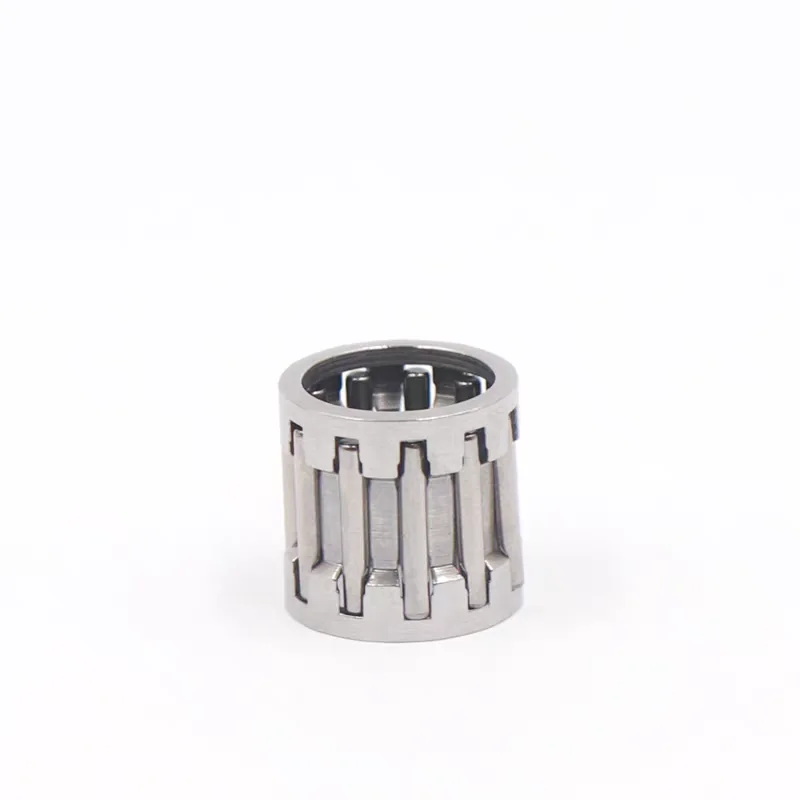
Common cages fall into two broad material categories: metal cages (steel and non-ferrous metals) and non-metal cages. For some special operating conditions, composite cages are also used to meet needs like high-temperature resistance, corrosion resistance, self-lubrication, and non-magnetic properties. eimbearing has built up extensive, proven expertise in designing and manufacturing cages from all these materials—here's a breakdown of each.
Steel Cages
Steel cages offer high strength, good toughness, easy machinability, and controllable cost. That makes them the most widely used category in rolling bearings and a basic option in eimbearing's product lineup.
- Common materials: Thin-plate stamped cages are usually cold-stamped from grades 08 and 10 high-quality carbon steel sheet. Solid cages are typically made from grades 20, 30, and 45 high-quality carbon steel, stainless steels like 0Cr18Ni9 and 1Cr18Ni9Ti, or structural and alloy steels such as 40CrNiMo, ML15, and ML20.
- Manufacturing notes: Finished cages usually go through heat treatment—high-temperature tempering, recrystallization annealing—to relieve internal stress and restore flexibility. They can also get surface treatment if needed to lower the friction coefficient.
- Where they work best: They handle a wide range of conditions, from small and medium general-purpose bearings all the way to large heavy-duty bearings.
Non-Ferrous Metal Cages
Non-ferrous metal cages have properties steel doesn't, so they can handle special conditions like high speed and high temperature. The main types are copper alloys, aluminum alloys, and zinc-aluminum alloys.
- Copper alloy cages: These include brass, aluminum bronze, and similar materials. Their main strengths are excellent thermal conductivity, low friction coefficient, good formability, a high upper limit for long-term service temperature, and outstanding anti-seizure ability. One thing to watch out for: brass cages don't work in ammonia environments because they can crack from stress corrosion.
- Aluminum alloy cages: They're low-density and lightweight, so they generate less centrifugal force at high speeds, and they also have good thermal conductivity and corrosion resistance.
- Zinc-aluminum alloy cages: They're cheaper, low-density, and offer a good balance of performance—great value for the money.
Non-Metallic Cages
Non-metallic cages are made mainly from polymers and composites. They're known for being lightweight, self-lubricating, and quiet, making them a go-to choice for high-speed, low-noise bearings in recent years.
- Common materials: The main base materials include nylon, phenolic laminated cloth, and polytetrafluoroethylene. In industrial applications, polymers are often modified—like with glass fiber filling—to further boost strength and temperature resistance.
- Core characteristics: The material is much less dense than metal, so the cages have low inertia when they spin. They slide really well, so there's very little friction heat or wear when they move against lubricated rolling elements. They're self-lubricating, so the bearing can keep running normally for a while even if the lubricant runs low.Limitations: They have limited heat resistance. Under prolonged high-temperature conditions, they can warp, age, and become brittle, so their applications are constrained by the operating temperature range.
III. Types of Common Manufacturing Processes
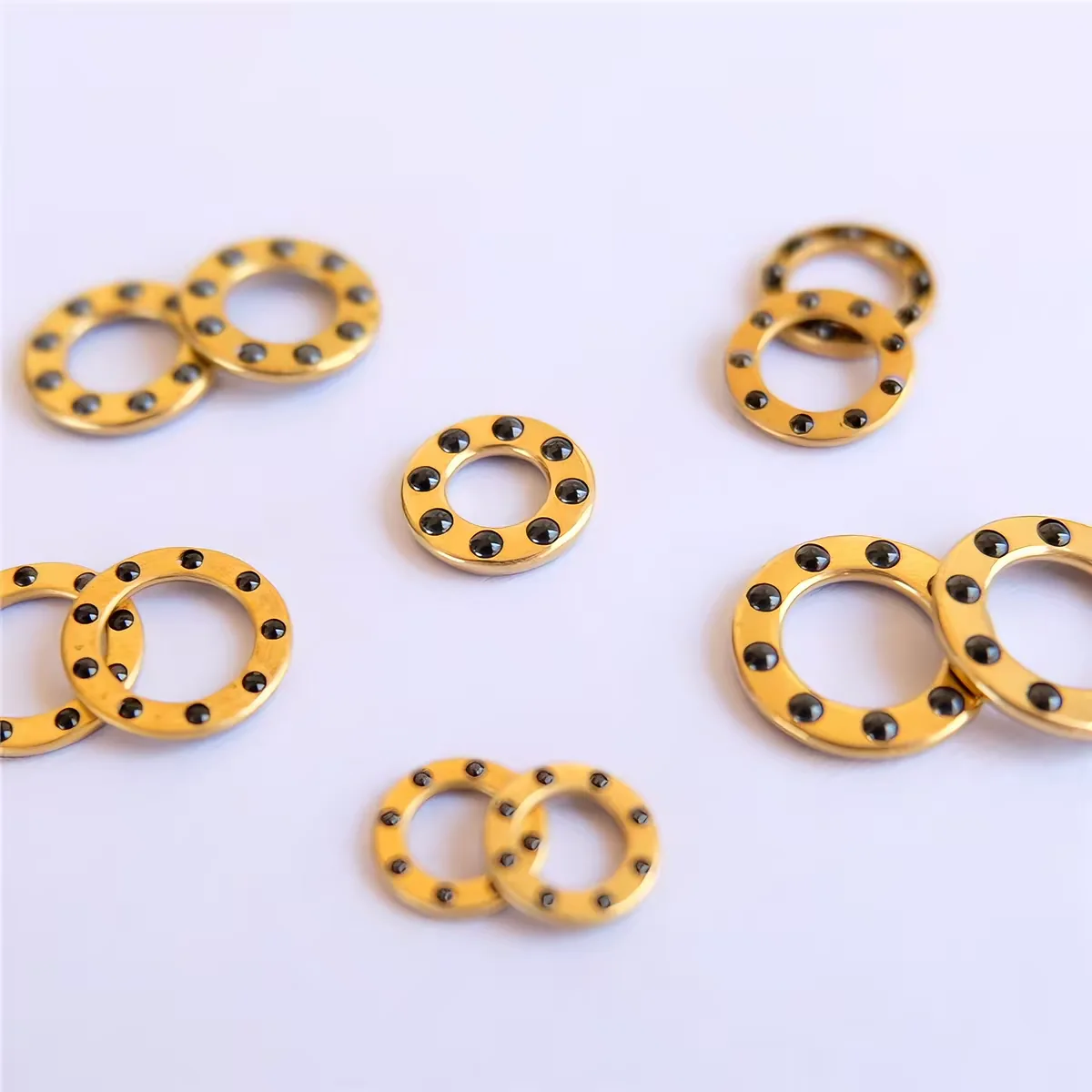
Depending on the forming method, die casting and plastic casting are two typical precision forming processes, each used for cages made from different materials. eimbearing has a solid quality control system for both methods to ensure the precision and overall quality of the finished products.
(I) Die-Cast Cages
Die-cast cages are made from non-ferrous metals like aluminum alloy and brass, formed in one piece using pressure casting.
Process flow: The metal is heated and melted, then poured into the mold of a die-casting machine. After a single cast, the finished part is obtained by turning off the gate.
Process advantages: Die casting gives you good shape and size accuracy right off the bat, with no extra machining needed, so it's fast to produce; during die casting, the metal crystallizes and solidifies into a fine grain structure, and the finished product has good surface quality and excellent wear resistance; you waste less material, which brings down overall production costs.
Process limitations: Die-cast aluminum alloy cages need big, heavy-duty production equipment, and the molds are complicated and expensive to design and make; during die casting, the cage pockets can get scratched up; when things get rough—lots of impact, vibration, and frequent speed changes—die-cast cages aren't as reliable as they could be.
(II) Plastic-Cast Cages
Plastic casting—that's injection molding—is the go-to way to make engineering plastic cages.
Process flow: Vacuum-dried plastic pellets are put into the hopper, heated with resistance wires until they melt into a semi-liquid state, and then a plunger or moving screw pushes the melted plastic through a nozzle into the mold. After being held at temperature and cooled, the finished cage is demolded.
Process advantages: One injection molding produces a finished product with high dimensional accuracy and a smooth surface, with no need for extra machining, so it's fast to produce; the mold and forming process are easy to automate and control, which makes assembling the bearing a breeze; the finished product is wear-resistant, non-magnetic, and low-friction.
Process limitations: Because plastic naturally warps, ages, and gets brittle, and because of how the cage is designed and how injection molding works, plastic-cast cages aren't suitable for every harsh operating condition, so their applications are somewhat limited.
IV. Key Design Parameters and Selection Points
(I) Radial Offset
Once the cage is installed in the bearing, there's some play between the pockets and the rolling elements, so the cage can shift radially. The most it can shift is called the radial offset. The radial offset has to be carefully designed and checked—you have to make sure that even at maximum radial offset, the cage won't rub against the inner or outer ring, which would cause abnormal wear, overheating, and noise.
(II) Core Selection Principles
The performance of cages varies significantly depending on material and manufacturing process, so selection needs to be evaluated based on the actual operating conditions. For a practical selection review, we've boiled it down to these principles:
5. Engineering plastic cages: Lightweight and low inertia, making them suitable for higher-speed applications. When they fail, it's gradual—they don't just crack all of a sudden—which makes them a good fit when you can't afford sudden downtime. Conventional engineering plastic cages have an operating temperature range of -40°C to 120°C. You should be careful using them in high-temp or explosive environments, and they're usually not recommended for things like mining equipment where safety demands are extremely high.
6. Brass cages: They work well in a wide range of conditions and have no special restrictions in normal use, but you can't use them around ammonia. Because of cost and design limitations, you don't see copper cages much in miniature or small bearings.
7. Steel cages: They're strong and reliable, and they work across a wide range of conditions. There are proven options for everything from small general-purpose bearings to big heavy-duty ones, which makes them the go-to choice in industry.
Conclusion
Overall, even though the cage doesn't carry the bearing's main working load, it directly affects the bearing's operating limits, reliability, and service life. eimbearing recommends choosing the cage material and process based on your operating conditions—it's a key step in keeping bearings running stable long-term. If you have any questions while choosing or customizing, eimbearing's technical team can help you analyze your working conditions and pick the right cage.
Questions Buyers Should Ask About Bearing Cages
Should a steel cage always be preferred over a polymer cage?
Not necessarily. Cage material should be chosen for the bearing type, operating speed, temperature, lubricant and expected load cycle. A steel cage may be appropriate where strength and durability are priorities; a polymer design can be useful where low mass and controlled friction are important. The final choice must be compatible with the bearing manufacturer’s approved design.
Why does the bearing cage design matter during replacement?
Two bearings may have similar envelope dimensions but different internal cage designs. Those differences can affect operating speed, lubrication behavior, temperature suitability and the way the bearing handles vibration. When replacing an installed bearing, use the full designation and ask whether the proposed alternative has a compatible internal construction.
What information is needed for a custom cage?
Provide the drawing or bearing designation, the roller or ball arrangement, cage material requirement if specified, expected operating speed and temperature, lubricant and any unusual vibration or contamination concerns. The engineering team can review the information before confirming which details require further verification.
How should a buyer assess the manufacturing process?
Ask which surfaces are functionally critical, which dimensions or pocket clearances are inspected, and whether finishing or post-processing is necessary. The answers depend on whether the cage is machined, formed or molded. Do not assume that one manufacturing process automatically provides the same performance across all cage sizes and materials.
When comparing quotations, confirm whether the cage design is standard for the proposed bearing or has been adapted for the duty. Differences in material, guidance method and pocket geometry deserve a technical review even when basic bearing dimensions match.
What to Confirm Before Ordering
Confirm the complete model designation, dimensions, load direction, installation conditions, expected speed, lubrication and operating environment before selecting a bearing. For non-standard requirements, include a drawing or application details so the proposed solution can be checked.
Use the Bearing Model Finder or Technical Specifications to narrow down relevant series. For project-specific questions, send an inquiry.
Need to verify a bearing for your equipment?
Send the complete model designation or drawing, load conditions, speed, quantity and other critical requirements.