Bearing Clearance: C2, CN, C3, C4 and Selection
Technical guide | EIM Bearing
If you're in mechanical maintenance or buy bearings, chances are you've run into this: you made sure to pick genuine bearings, the model and precision grade were all correct, but shortly after installation they started overheating, making strange noises, or even seizing up completely. After checking everything else, it turns out the problem was — the clearance wasn't selected right.
As one of the most critical parameters of a bearing, clearance is often overlooked, yet it directly determines the bearing's service life and how stably it runs. In EIM Bearing's daily technical consultations and after-sales cases, improper clearance selection is one of the most common sources of problems. Today, using the national standard bearing clearance code specifications as a reference, we'll do a quick rundown of bearing clearance — from concept to selection, from measurement to application. We're limited in our knowledge and experience, so if there are any mistakes, please let us know.
I. What Exactly Is Bearing Clearance?
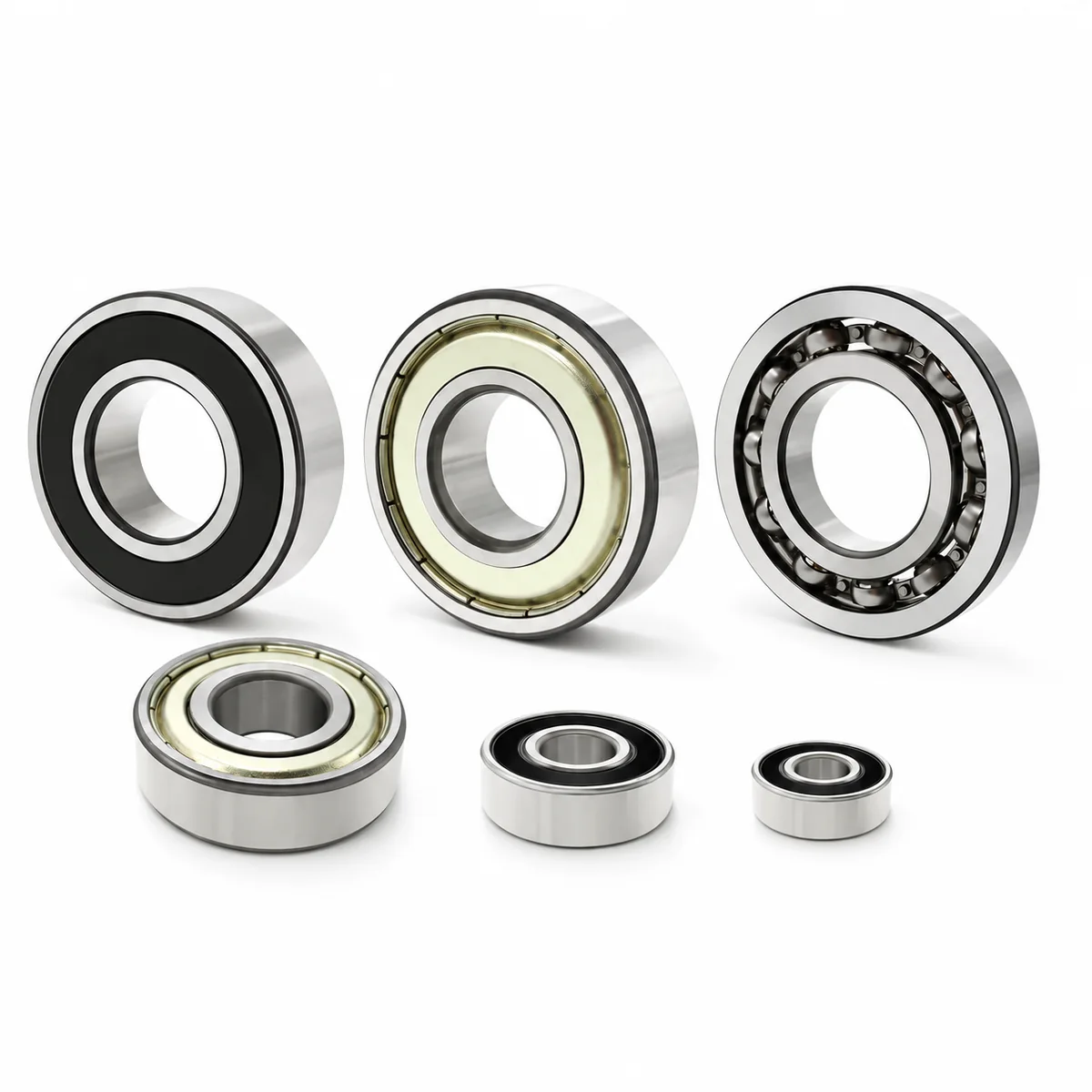
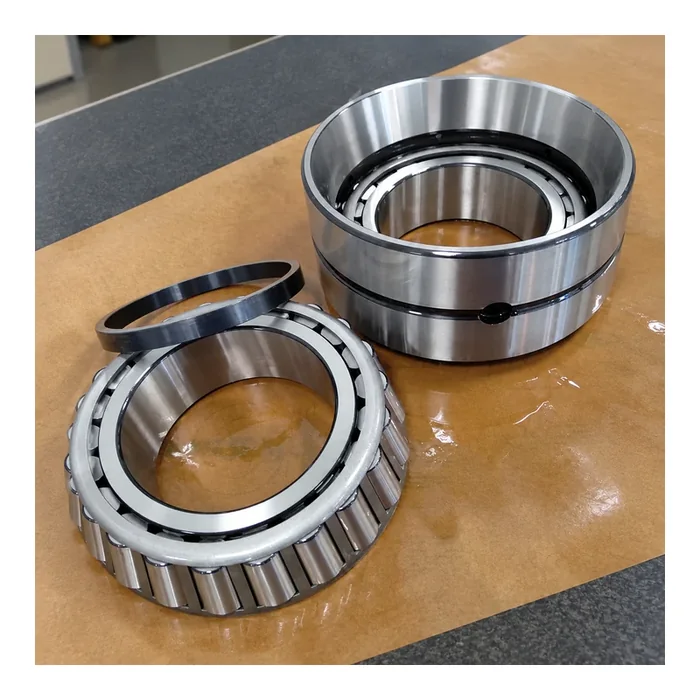
Simply put, bearing clearance is the gap left between the inner ring, outer ring, and rolling elements when the bearing is not yet mounted. When the inner and outer rings move relative to each other in the radial or axial direction, the maximum movement is the clearance. Depending on the direction of movement, there are two types:
Radial clearance: The maximum relative displacement between inner and outer rings in the radial direction — what you base your selection on in most cases.
Axial clearance: The maximum relative displacement between inner and outer rings in the axial direction. It's related to radial clearance — for the same bearing, the larger the axial clearance, the larger the radial clearance.
Based on operating condition, clearance is further divided into three types, which a lot of people mix up:
Original clearance (factory clearance): The clearance value of the bearing when it leaves the factory — that is, the /C2, /C3, etc. groups we specify when selecting. In the national standard, the standard clearance group code is /CN, which is usually omitted and not marked in the model number.
Installed clearance: After the bearing is press-fitted onto the shaft and into the housing, the interference fit makes the inner ring expand and the outer ring shrink, so the clearance becomes smaller than the original value.• Operating clearance: When the equipment is running, the bearing heats up and expands or contracts, causing the clearance to change further. The final actual working clearance is what really determines performance.
Bottom line: Selection is based on initial clearance, design must account for installed clearance, and what ultimately matters is operating clearance.
II. Don't Underestimate Clearance: What It Actually Does
Clearance isn't a "machining error" — it's a space intentionally built into the bearing design. Based on EIM Bearing's engineering practice, it has four key roles:
Thermal deformation compensation: During high-speed operation, friction generates heat, and the inner ring, outer ring, and rolling elements all expand. Reserving appropriate clearance offsets that expansion and prevents bearing seizure.
Maintaining a lubricant film: A lubricant film is needed between the rolling elements and raceways to carry loads. Proper clearance ensures the lubricant distributes evenly, forms effective lubrication, and reduces wear.
Accommodating interference fits: Interference-fit installation compresses the clearance. The initial clearance must include enough allowance for fit compression so that reasonable clearance remains after installation.
Affecting rotational accuracy and vibration: If clearance is too small, rotational resistance is high and heat generation is significant; if clearance is too large, impact during operation is great, noise is high, and rotational accuracy drops.
III. Selection: National Standard Clearance Groups and Where They Apply
Basic clearance groups (general scenarios)
/C2 (reduced clearance group): Clearance is smaller than the standard group. Suitable for scenarios requiring high rotational accuracy, stable loads, and low operating temperatures — such as ordinary precision machine tool spindles and low-speed precision equipment — where fit accuracy is critical.
/CN (standard clearance group, designation usually omitted from the model number): Often called the C0 group in the trade, it's the most general group, suitable for ambient temperatures, ordinary speeds, and conventional load conditions. The vast majority of general-purpose equipment defaults to this group, and /CN is usually not marked in bearing models./C3 (Large clearance group): The clearance is larger than the standard group, making it the most common upgrade choice on the factory floor. It suits high-speed operation, relatively high operating temperatures, and fits with significant interference, such as electric motors, fans, and pumps.
/C4 (Extra-large clearance group): The clearance is even larger, suitable for large temperature differences, heavy loads, and strong impact conditions, such as metallurgical equipment, mining machinery, and large gear reducers.
/C5 (Maximum clearance group): The clearance is the largest, used for special scenarios involving extreme high temperatures and heavy-load impacts, such as steel rolling equipment and large construction machinery.
Specialized and Subdivided Clearance Groups (Supplementary Provisions in the National Standard)
In addition to the basic groups, the national standard also defines clearance codes for specific categories and specific precision levels, for example: /CM: Motor-specific deep groove ball bearing clearance. The clearance range has been specially optimized to suit motor operating conditions, making it a common choice for motor bearings. Example: 6204-2RZ/P6CM. A word of caution: bigger clearance doesn't mean more durable, and smaller clearance doesn't mean more precise — it must match the working conditions. This is also the first thing EIM Bearing checks when helping customers select bearings.
IV. Common Pitfalls: The Dangers of Too Much or Too Little Clearance
Many people either default to the standard group for convenience or blindly pick a large clearance — both cause problems. In EIM Bearing's after-sales cases, these two situations each account for nearly half:
Typical problems of insufficient clearance:
Increased friction during operation, causing the bearing to heat up rapidly and temperatures to keep climbing
In severe cases, thermal expansion causes the clearance to disappear completely, leading to seizure or shaft-locking failures
Accelerated wear between rolling elements and raceways, significantly shortening bearing life
Typical problems of excessive clearance:
Rolling elements hammer the raceways during operation, noticeably increasing vibration and noise
The bearing load zone becomes smaller, causing localized stress concentration and accelerating fatigue spalling
Reduced rotational accuracy, with equipment runout exceeding tolerances, affecting machining or operational precision
V. On-Site Practical Guide: Measuring Bearing Clearance
routine maintenance and receiving inspection, the most common measurement is radial clearance, and there are two easy methods:
Feeler gauge method (for mid-size and large bearings)
Secure the inner ring, let the outer ring hang free, slip a feeler gauge between the rolling elements and the raceway, measure at several points around the circumference, and the average is your radial clearance. It's good for quick checks on site, with medium accuracy.
Dial indicator method (higher accuracy)
Fix the inner ring on a stand, press the dial indicator tip against the outer diameter of the outer ring, move the outer ring up and down, and the needle's maximum deflection is the radial clearance. When measuring, make sure the rolling elements sit at the bottom of the raceway. Take readings at several points and average them. This method is for inspections that need high accuracy.
Axial clearance is measured the same way—just push the inner and outer rings axially with a dial indicator and read the difference.
VI. How to Choose: 5 Key Factors That Determine Clearance
You don't need to memorize the groups—just check these 5 factors:
Working temperature: The hotter it runs, the more the bearing expands, so you need a larger original clearance.
Interference: A tight fit between the inner ring and shaft, or the outer ring and housing bore, squeezes the clearance. The tighter the fit, the larger the original clearance you need to choose.
Speed: At high speed, centrifugal forces are high and it generates more heat, so you need more clearance to compensate for thermal deformation. For low-speed heavy loads, you can go with a smaller clearance based on precision needs.
Type of load: Under impact loads and heavy-load conditions, too little clearance can cause stress concentration, so go with a larger clearance. For stable light loads, you can pick a smaller clearance to ensure precision.
Precision needs: For equipment that needs high rotational precision, and as long as temperature and fit allow, go with a smaller clearance to reduce runout. For motors, the /CM special clearance is the first choice.
Summary
Bearing clearance is an "easy to overlook but absolutely key" parameter—there's no such thing as absolutely good or bad, it's all about whether it's the right fit. Picking the right clearance group based on the national standard is the first step to keeping your bearings running smoothly.
From a single motor to an entire production line, bearings are like the joints of machinery, and clearance is the "play" in those joints—too tight and it won't move, too loose and it wobbles, and only just right is truly right.
Take two extra minutes when selecting to check your operating conditions against the national standard groups, and keep an eye on temperature and abnormal noise during maintenance—this can help you avoid most failures and keep your equipment running more smoothly and lasting longer. If you have any questions about clearance selection or measurement, the EIM Bearing technical team is often happy to help.
Bearing Clearance: Practical Questions Before Purchase
Is C3 always better than standard clearance?
No. C3 specifies a different internal clearance range; it is not a general statement of quality or precision. It may be suitable when the shaft fit and temperature difference significantly reduce operating clearance, but an incorrect choice can increase noise or affect running behavior. Start with the bearing manufacturer’s specified clearance for the actual application.
Why can a bearing with the right part number still run hot?
Heat can have several causes, including incorrect fits, lubrication, preload, contamination, misalignment and clearance selection. The catalog clearance is measured under defined conditions before installation. Mounted and operating clearances can change with interference fits and differential thermal expansion. Temperature alone does not prove that a particular clearance group was wrong.
Should clearance be measured before installation?
When clearance is a critical acceptance characteristic, record the required range and measurement method before placing the order. Check whether the measurement procedure applies to the bearing type, and avoid applying a feeler-gauge method intended for a roller bearing to a product where that method is unsuitable. Installation conditions should be considered separately.
What should an RFQ specify?
Include the complete bearing designation, clearance suffix, accuracy requirement where applicable, lubrication method, shaft and housing fits, operating temperature and any known axial or radial loads. If the equipment manufacturer specifies a clearance group, include that requirement rather than replacing it with a more common alternative.
Can clearance be changed after purchase?
A clearance suffix is part of the manufactured bearing specification. In most routine sourcing situations, the practical approach is to select and order the correct group rather than assume it can be adjusted during installation. For arrangements with adjustable preload, follow the equipment and bearing manufacturer’s instructions.
What if operating conditions are not fully known?
When replacing bearings on existing machinery, collect the markings on the removed part, the installation drawing, shaft and housing dimensions, normal running temperature, speed range, lubrication details and observations from the last service period. Share these with the technical team rather than selecting a clearance suffix on price or availability alone. The additional context can reveal whether a different clearance group, fit recommendation or bearing arrangement needs to be discussed before purchase.
Record the selection decision and the corresponding specification so future replacements can be checked consistently. A repeatable technical record is often more useful than a generic rule about which clearance suffix is best.
What to Confirm Before Ordering
Confirm the complete model designation, dimensions, load direction, installation conditions, expected speed, lubrication and operating environment before selecting a bearing. For non-standard requirements, include a drawing or application details so the proposed solution can be checked.
Use the Bearing Model Finder or Technical Specifications to narrow down relevant series. For project-specific questions, send an inquiry.
Need to verify a bearing for your equipment?
Send the complete model designation or drawing, load conditions, speed, quantity and other critical requirements.